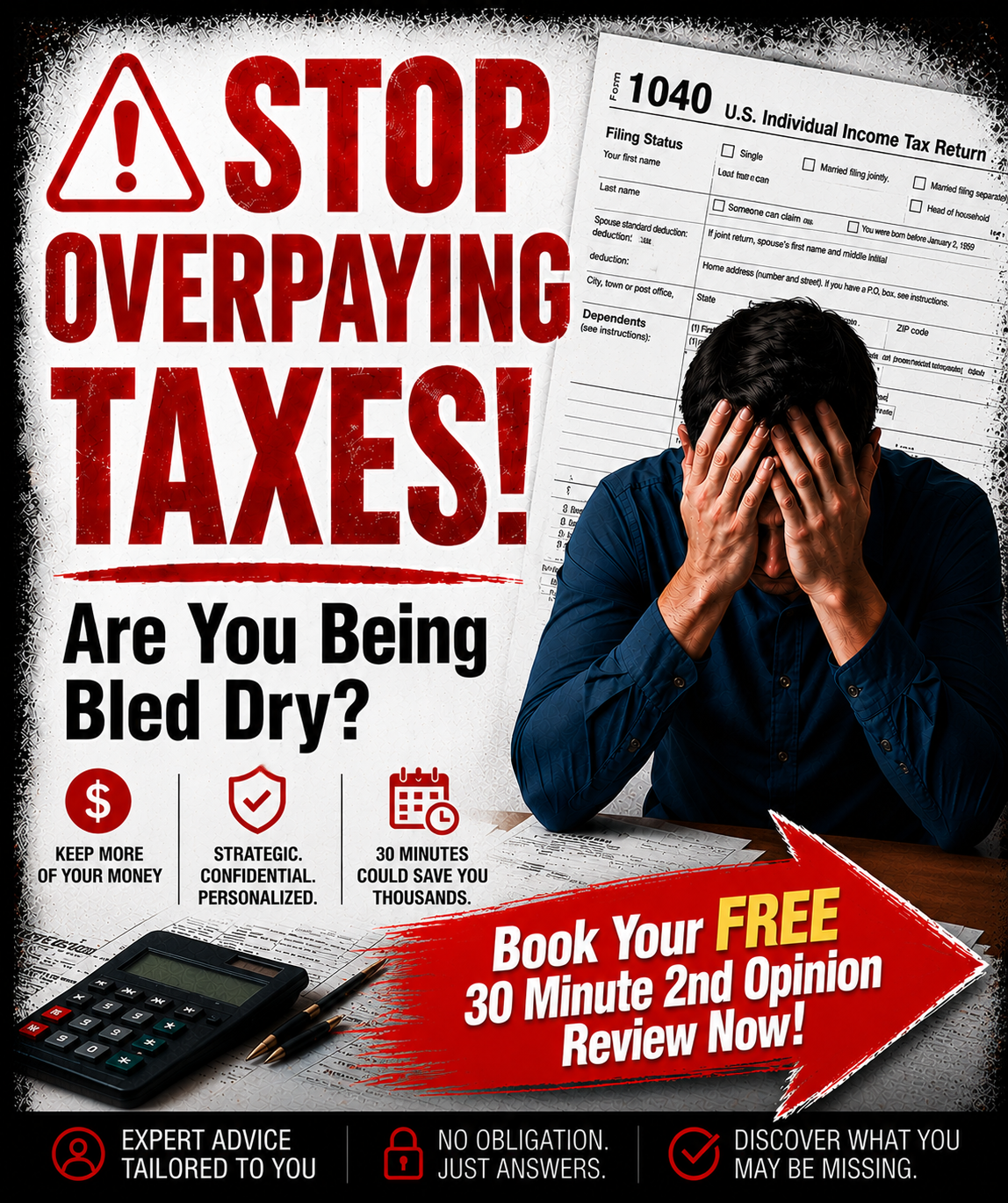
Why Every Retiree Should Consider a Second Opinion on Their Retirement Tax Strategy
When it comes to your health, getting a second opinion is often considered a smart decision.
So why wouldn’t you do the same with your retirement taxes?
Many retirees spend decades building retirement savings, yet very few have someone reviewing how taxes, retirement income, investments, Required Minimum Distributions (RMDs), Roth conversions, Social Security benefits, and Medicare premiums all work together.
A retirement tax second opinion isn’t about replacing your current CPA or financial advisor. It’s about making sure every piece of your retirement plan is working together as efficiently as possible.
What Is a Retirement Tax Second Opinion?
A retirement tax second opinion is an independent review of your current retirement tax strategy.
The purpose is to identify areas where your current plan may create unnecessary taxes or missed planning opportunities. Every situation is unique, and recommendations depend on your individual financial circumstances.
Why Do Retirees Seek a Second Opinion?
Many retirees already have trusted professionals.
However, retirement planning often involves multiple specialists:
- A CPA prepares tax returns.
- An investment advisor manages investments.
- An attorney creates estate documents.
Each professional plays an important role, but someone still needs to evaluate how these areas interact over time.
Questions Every Retiree Should Ask
Are my Required Minimum Distributions creating larger tax bills than necessary?
RMDs can increase taxable income and may also affect other areas of retirement, depending on your overall financial picture.
Should I consider a Roth conversion?
For some retirees, Roth conversions may offer long-term benefits. For others, converting at the wrong time could increase current taxes or affect Medicare premiums. Careful analysis is important.
Is more of my Social Security becoming taxable than necessary?
The taxation of Social Security benefits depends on your combined income. Coordinating retirement withdrawals may affect how benefits are taxed.
Could Medicare IRMAA increase my healthcare costs?
Higher income can lead to Income-Related Monthly Adjustment Amounts (IRMAA), increasing Medicare Part B and Part D premiums. Understanding how retirement income decisions affect these thresholds is an important part of planning.
Do I have a retirement withdrawal strategy?
Choosing which accounts to withdraw from—and when—can influence taxes throughout retirement. A coordinated strategy may help improve long-term tax efficiency.
Is a CPA Enough for Retirement Tax Planning?
CPAs provide valuable tax preparation and advice.
Retirement tax planning, however, often focuses on future decisions rather than reporting past events. Reviewing withdrawal timing, Roth conversion opportunities, RMD strategies, Social Security taxation, and Medicare considerations may require a broader planning approach.
Why a Second Opinion Can Provide Peace of Mind
A second opinion doesn’t mean your current professionals are doing anything wrong.
It simply provides another perspective on decisions that may affect your retirement for years to come.
Many retirees seek a second opinion before making major financial moves because they want greater confidence that their plan has been thoroughly reviewed.
Frequently Asked Questions
Should retirees get a second opinion on their taxes?
Many retirees choose to get a second opinion to better understand how retirement income, taxes, and long-term planning work together. Whether changes are appropriate depends on each person’s circumstances.
What is retirement tax planning?
Retirement tax planning is the process of evaluating future financial decisions—such as retirement withdrawals, Roth conversions, RMDs, Social Security, and Medicare—to understand their potential tax impact over time.
Is retirement tax planning different from tax preparation?
Yes. Tax preparation reports what has already happened. Retirement tax planning focuses on future decisions and how they may affect your lifetime tax situation.
When should I get a retirement tax review?
Many people schedule a review before retirement, before RMDs begin, before making large withdrawals, or before completing a Roth conversion.
Schedule Your FREE 1-Hour Retirement Tax Review
If you’ve never had someone review your retirement tax strategy as a whole, now may be the right time to ask questions.
At Brookfield Tax Planning, we help retirees evaluate how taxes, retirement income, Required Minimum Distributions, Roth conversion opportunities, Social Security taxation, Medicare IRMAA, and withdrawal strategies fit together.
During your complimentary review, we’ll discuss topics such as:
- Retirement tax planning
- Retirement income planning
- Required Minimum Distribution (RMD) planning
- Roth conversion opportunities
- Social Security taxation
- Medicare IRMAA considerations
- Retirement withdrawal strategies
- Coordinating retirement tax decisions
Schedule your FREE 1-Hour Retirement Tax Review today.
No Cost. No Obligation. Just Answers.
708-485-3439