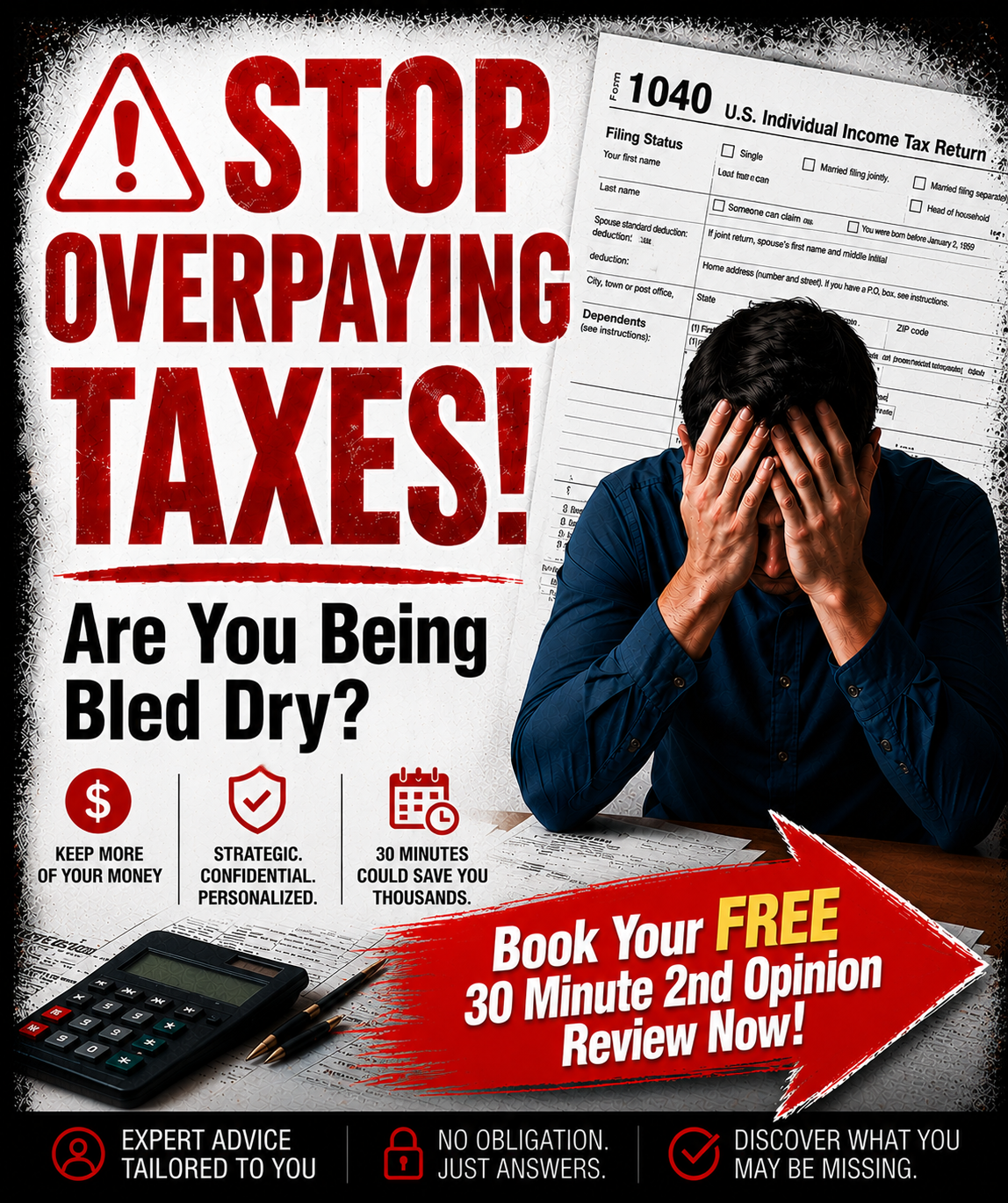
Retirement Tax Planning: Could One Decision Cause You to Pay More in Taxes?
Retirement should be the time when your financial life gets simpler.
But when it comes to taxes, that isn’t always what happens.
You may suddenly be making decisions about Roth conversions, Required Minimum Distributions (RMDs), IRA withdrawals, Social Security, investment sales, capital gains, Medicare premiums, and retirement income.
And here’s the problem:
A decision involving one of these areas can potentially affect several others.
That’s why good retirement tax planning isn’t simply about asking whether one particular strategy is good or bad.
The better question is:
“What could this decision do to my entire retirement tax picture?”
Here are some of the most important questions retirees should consider before making their next financial move.
Should I Do a Roth Conversion in Retirement?
This is one of the most common retirement tax questions.
A Roth conversion can potentially be an effective long-term planning strategy for some retirees.
But that doesn’t mean everyone should do one.
Converting money from a traditional IRA to a Roth generally creates taxable income in the year of the conversion.
Before making a decision, you may want to ask:
- How much should I convert?
- What will the conversion do to my taxable income?
- Should I convert in one year or over several years?
- How could it interact with my other retirement income?
- What could it mean for future RMDs?
- Could it affect Medicare IRMAA?
The question isn’t simply:
“Are Roth conversions good?”
It’s:
“Does a Roth conversion make sense for MY retirement tax situation?”
Can a Roth Conversion Push Me Into a Higher Tax Bracket?
Potentially.
Because a Roth conversion generally adds taxable income in the year of conversion, the size of the conversion matters.
This is one reason Roth conversion tax planning should consider your other income for the year.
A conversion that makes sense at one amount may produce a different tax result at another amount.
Before converting, it can be important to understand the potential consequences rather than deciding on an amount arbitrarily.
Should I Take Money Out of My IRA Before RMDs Begin?
For some retirees, the years before Required Minimum Distributions begin may deserve special attention.
You may want to ask:
“Should I withdraw some money from my IRA now instead of waiting until I’m required to take distributions later?”
There isn’t one answer for everyone.
Your current income, future income, tax situation, retirement needs, Roth conversion opportunities, and projected RMDs can all be relevant.
That’s why RMD tax planning can begin well before your first Required Minimum Distribution.
How Can I Reduce Taxes on My RMDs?
Retirees frequently search for ways to reduce taxes on Required Minimum Distributions.
RMDs from traditional tax-deferred retirement accounts generally create taxable income.
The important planning question may therefore be:
“What decisions could I consider BEFORE my RMDs become a significant part of my taxable income?”
Depending on your circumstances, that discussion might include Roth conversions, withdrawal timing, charitable planning, and other retirement tax strategies.
Not every strategy is appropriate for every retiree.
Can IRA Withdrawals Make More of My Social Security Taxable?
Potentially.
The taxation of Social Security benefits depends partly on your other income.
That means taking additional taxable income from an IRA can potentially affect your overall tax picture.
This is why Social Security tax planning and IRA withdrawal planning shouldn’t necessarily be treated as completely separate decisions.
Instead of simply asking:
“How much should I withdraw from my IRA?”
Consider asking:
“What happens to my overall taxes if I make this withdrawal?”
Can Retirement Income Increase My Medicare Premiums?
For some retirees, yes.
Medicare’s Income-Related Monthly Adjustment Amount, commonly called IRMAA, can result in higher Medicare Part B and Part D premiums when income exceeds applicable thresholds.
That means certain financial decisions can potentially have consequences beyond your income-tax return.
Before creating a large amount of additional income, retirees may want to ask:
“Could this decision affect my Medicare IRMAA premiums?”
That’s particularly worth considering with large Roth conversions, IRA distributions, and investment gains.
Can a Roth Conversion Increase My Medicare Premiums?
Potentially.
Because Roth conversions generally increase taxable income in the year of conversion, they can also affect income calculations relevant to Medicare IRMAA.
That doesn’t automatically mean a Roth conversion is a bad strategy.
It means the potential Medicare effect should be considered along with the potential long-term benefits of the conversion.
This is another example of why retirement tax decisions need to be evaluated together.
Could Selling an Investment Increase My Retirement Taxes?
Selling an appreciated stock, mutual fund, real estate holding, or other investment can generate a capital gain.
So before selling, ask:
“What happens to my tax situation if I realize this capital gain this year?”
Your other income can matter.
That might include:
- RMDs
- IRA withdrawals
- Pension income
- Social Security
- Roth conversions
- Interest and dividends
- Other capital gains
A significant investment sale should therefore be considered within your broader retirement income tax planning.
Do Capital Gains Affect Medicare IRMAA?
Capital gains can increase income used to determine Medicare IRMAA.
This can surprise retirees who think of selling an investment as only an investment decision.
It may actually be an:
Investment decision + tax decision + Medicare planning decision.
Before realizing a significant capital gain, it can be worth understanding how the additional income fits with everything else happening during that tax year.
Can Capital Gains Affect Social Security Taxes?
Potentially.
Because the federal taxation of Social Security can depend partly on other income, realizing investment gains can affect the overall calculation.
This is another reason to look beyond the tax rate on the investment itself.
The better question is:
“What else could this capital gain affect?”
Which Retirement Account Should I Withdraw From First?
Many retirees have money in several different places:
- Traditional IRA
- 401(k)
- Roth IRA
- Brokerage accounts
- Savings accounts
- Other investments
So which account should you use first?
There is no universal answer.
A tax-efficient retirement withdrawal strategy should consider more than simply where the money is easiest to access.
Your current tax situation, future RMDs, Social Security, Roth assets, capital gains, Medicare considerations, estate goals, and income needs can all play a role.
What Is the Most Tax-Efficient Way to Withdraw Money in Retirement?
This is one of the most important retirement planning questions—and one of the hardest to answer with a general rule.
The goal isn’t necessarily to pay the lowest possible tax this year.
Sometimes a decision that reduces taxes today could create different consequences later.
That’s why retirement tax planning may involve evaluating taxes over multiple years rather than focusing only on April 15.
The appropriate withdrawal strategy depends on the individual.
Could Several Good Retirement Decisions in the Same Year Create a Tax Problem?
This is something retirees can easily overlook.
Imagine considering all of these during the same year:
A Roth conversion.
A large IRA withdrawal.
Selling an appreciated investment.
Each decision might have a reasonable purpose.
But what happens when the additional income from several decisions lands in the same tax year?
That’s why major retirement decisions shouldn’t necessarily be evaluated independently.
You want to understand the combined effect.
How Can I Legally Reduce My Taxes in Retirement?
There isn’t one secret strategy for reducing retirement taxes.
Depending on your circumstances, proactive tax planning for retirees may involve evaluating:
- Roth conversions
- Required Minimum Distributions
- IRA and 401(k) withdrawals
- Social Security taxation
- Capital gains
- Medicare IRMAA
- Charitable giving
- Investment income
- Retirement withdrawal sequencing
- Estate and legacy planning
- Year-end tax planning
The appropriate combination depends on your individual financial circumstances.
Do I Need Retirement Tax Planning If I Already Have a CPA?
Having your tax return professionally prepared and having a proactive retirement tax plan aren’t necessarily the same thing.
Tax preparation generally looks backward:
“What happened last year?”
Tax planning looks forward:
“What decisions should I consider BEFORE this year ends?”
A useful question to ask is:
“Is someone actively helping me plan my future taxes, or are we primarily preparing my return?”
Knowing the answer can help you determine whether getting a retirement tax second opinion makes sense.
Do I Need a Tax Planner If I Already Have a Financial Advisor?
A financial advisor may help with investments and financial planning.
The more important question is whether someone is specifically looking at how your financial decisions interact with your tax situation.
Ask yourself:
Who is looking at my Roth conversions, RMDs, IRA withdrawals, capital gains, Social Security taxation, Medicare IRMAA, and retirement income together?
If you’re not sure, getting a second opinion on your retirement tax strategy may provide valuable clarity.
What Should a Retirement Tax Review Include?
A comprehensive retirement tax review can look beyond your most recent tax return.
Depending on your circumstances, it may include:
- Current taxable income
- Projected future income
- IRA and 401(k) balances
- Roth accounts
- Future RMDs
- Roth conversion opportunities
- Social Security taxation
- Capital gains
- Medicare IRMAA
- Retirement income needs
- Withdrawal strategies
- Charitable planning
- Estate and legacy considerations
The purpose isn’t to force every possible tax strategy into your plan.
It’s to determine which strategies and risks actually matter for YOU.
Before Your Next Retirement Decision, Ask One More Question
Whether you’re considering a Roth conversion, taking an IRA withdrawal, selling an investment, or planning around your RMDs, ask:
“What could this decision affect that I haven’t considered?”
That’s where proactive retirement tax planning becomes valuable.
RMDs. Roth conversions. Capital gains. Social Security. Medicare. Retirement income.
They’re different pieces of the same retirement tax picture.
Before making a major decision, make sure you’re looking at the entire picture.
Get a Second Opinion on Your Retirement Tax Situation
If you’re retired or approaching retirement and aren’t sure how your next financial decision could affect your taxes, Brookfield Tax Planning can help you take a closer look.
Schedule Your FREE 1-Hour Retirement Tax Review
Get a second opinion before your next retirement move.
Call 708-485-3439
BrookfieldTaxPlanning.com
No Cost. No Obligation. Just Answers.
Brookfield Tax Planning
Smart Planning. Lasting Impact.